
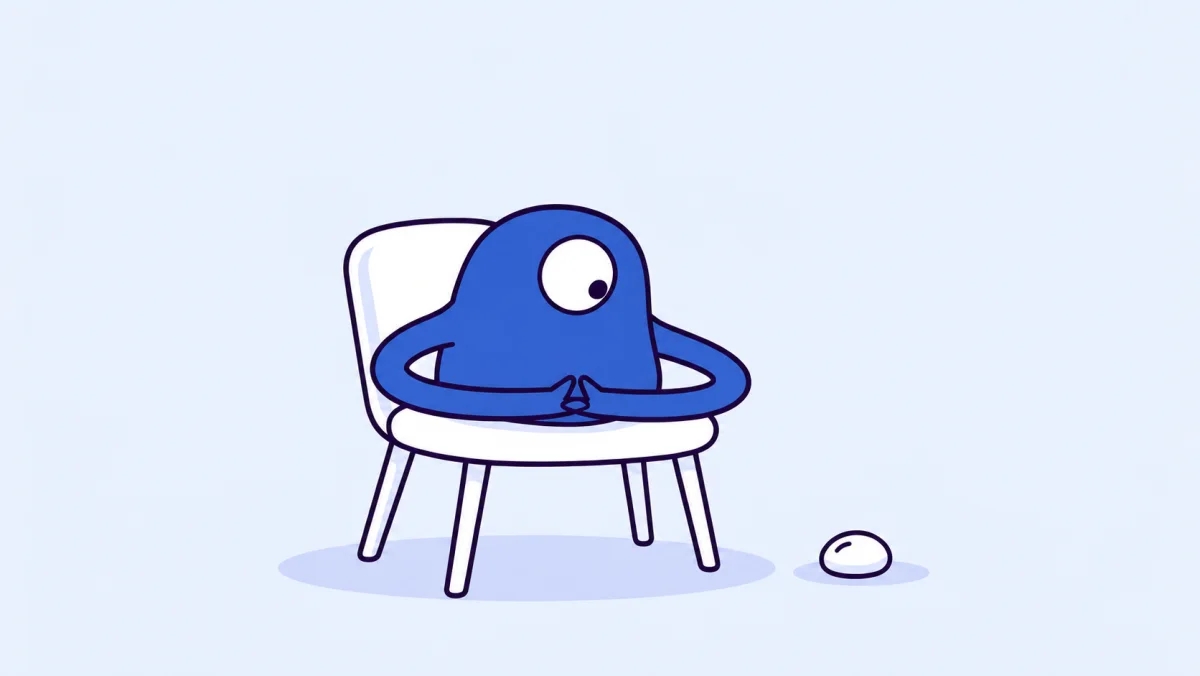
A chair and open eyes are valid starting points
Imagine closing your laptop for a short afternoon break, then postponing meditation because you have no cushion and dislike sitting cross-legged. You can stay in your chair, clear a little space and notice where your body meets the seat.
This article offers an everyday attention practice, rather than a posture to achieve. Particular traditions and courses may have their own instructions. Here, begin with comfort and support.
Settle into a supported seat
Choose a stable chair that supports you. If comfortable, rest your feet on the floor or a secure footrest, and let your hands rest on your legs or the armrests. You can use the backrest without holding your back rigid.
The NHS beginner guide includes chair sitting as an option. Try your arrangement briefly. If you are spending the whole time enduring discomfort, move or choose another chair; keeping still does not need to become the task.
Where to look with your eyes open
Try a plain patch of wall or floor ahead, somewhere you are unlikely to start reading. Blink normally instead of fixing a stare. Johns Hopkins describes both open and closed eyes as options, with a soft gaze when the eyes are open.
Your view can stay in the background while contact with the seat remains your main focus. If you start studying a pattern or checking a screen, notice that and return to the contact. You can also try closing your eyes if that feels comfortable.
Try about two minutes in your chair
Read the steps first, then try them at an approximate pace. You do not need to read and time every moment together. Set notifications aside for a short break from answering messages.
First half-minute: find support
Settle your weight, rest your hands and look around the room. Choose open or closed eyes and let your shoulders sit without holding a special pose.
Next minute: notice contact
Feel the seat supporting you, or your feet meeting their support. Let breathing keep its usual rhythm. When a thought takes you elsewhere, feel the contact again without restarting the timer.
Last half-minute: check your effort
Notice whether you are staring, frowning or gripping an armrest. Move if needed, then feel the support beneath you once more.
Finish: return to your next activity
Notice the room, move your fingers and choose what comes next. You can finish here without waiting for an unusually quiet feeling.
You can move or stop
If you notice numbness, pain or growing difficulty holding the position, uncross your legs, shift or end the practice. You can notice the change in sensation as you adjust; discomfort does not have to become an endurance task.
If closing your eyes makes you want to keep checking the room, open them. If an open gaze keeps leading to your screen, move it out of view or face another direction. Change one small thing at a time to see what suits this moment.
Continue with a little sound
For a sound to practise with, open Oat’s one-minute rain preview. Keep your chosen posture and eye position, and shift attention from the seat to a small change in the rain. Stop when the preview ends.
If you are new to practice, continue with the five-minute beginner guide. If getting caught in thought is your main concern, read the mind-wandering article. The Oat app offers voice guidance and nature sounds to choose from.