
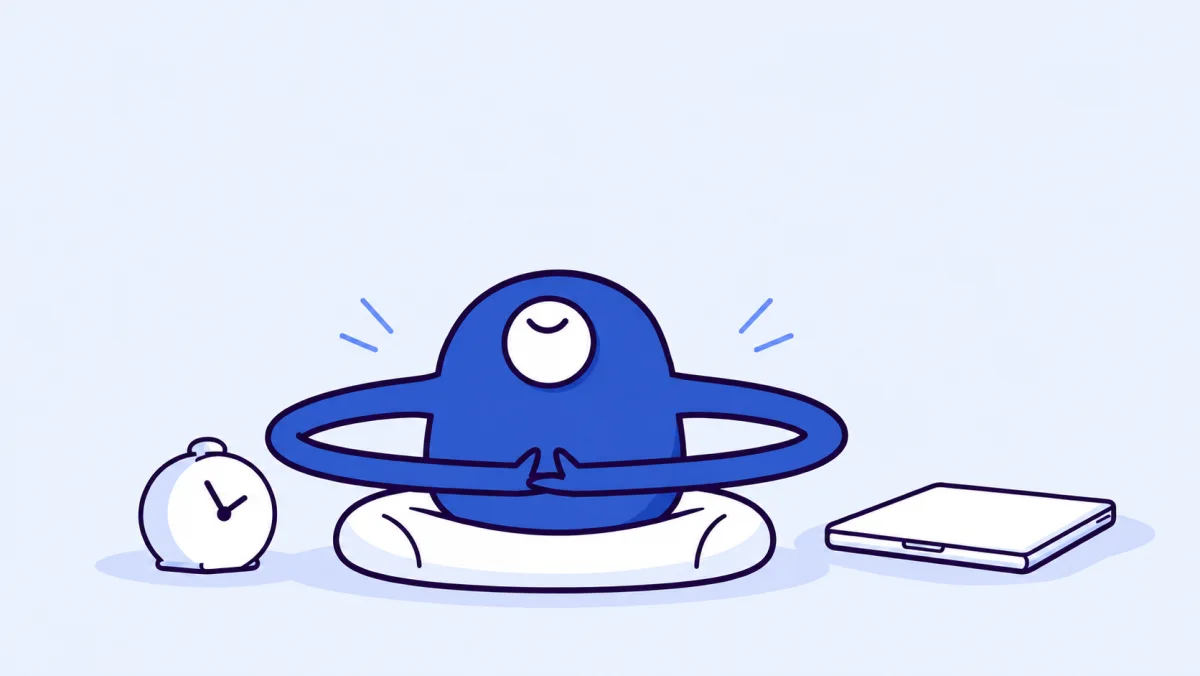
Choose the time you can actually set aside
If you have one or two minutes today, plan around that. The two-minute sequence here gives an attention practice a beginning and an ending. It is an editorial suggestion, not a research-established minimum or a claim that two minutes has the same effects as a longer session.
The NHS beginner guide suggests finding a regular routine that works for you. Start with a slot you are willing to leave open today, rather than immediately committing to twenty minutes every day.
Put the practice after a specific everyday action
Replace a vague plan to meditate when you have time with something you can recognize: “After rinsing my cup at lunch, I will sit at the table for two minutes.” Putting the cup down starts the practice; getting up for the next task ends it.
Choose a moment when you can safely stop. Try one place first. Turn the screen away or put notifications aside; a timer with a gentle sound is optional. Practice only when you can pause safely, without driving or attending to another safety task.
Try this two-minute practice
Read the steps first, then try them at roughly this pace. The timings are a planning aid; you do not need to keep checking a clock. If timing becomes a distraction, finish in your own time.
First 20 seconds: arrive
Sit somewhere comfortable and supported. Put down what you are holding and look around. Your eyes can stay open. Notice where your body is.
Next minute: feel one point of contact
Choose your feet on the floor or your body on the chair. Notice pressure, temperature, or simply the feeling of being supported. Let breathing continue normally, without trying to deepen it.
Next 20 seconds: notice and return
If you find yourself composing the next email, feel that contact again. You do not need to restart the timer, even if you spent the previous minute thinking. If you have not noticed a distraction, keep attending to the same sensation.
Last 20 seconds: finish and choose
Widen your attention, look around the room, and move your fingers. Choose one thing to do next, then finish. You do not need to wait for a noticeable change in mood.
An interruption does not create time to make up
If someone needs you halfway through, respond and end the practice there. You can try another short pause later if there is room. Answering messages while the timer runs does not need to count as finishing the planned exercise.
With one minute, feel the support under your feet, return when you notice distraction, and leave a little room to finish. With five minutes, extend the contact-awareness part while keeping the arrival and ending. Describe what you actually did. Move or stop if you are uncomfortable or do not want to continue.
Repeat the same arrangement, then adjust it
Afterwards, one concrete note is enough: “Sat for a minute after rinsing my cup, then answered a call.” There is no need to score your calmness or treat an interrupted practice as a debt.
Try the same cue over the next few days. If you are repeatedly interrupted, choose a moment with more room to pause. If you miss a day, return to the original arrangement next time. Decide whether to add time by considering how easily you can begin and whether you want to stay longer.
Try one minute with sound
The Oat website offers a one-minute rain preview as another option. Settle first, press play yourself, listen to changes in the rain, and look around when it ends. It is a one-minute listening preview, not a timer for the two-minute exercise above.
The Oat app offers voice guidance and natural sounds. For a fuller introduction, read the five-minute beginner guide. There are also articles on finding a comfortable position and continuing when your mind wanders.
Source and practice notes
The routine advice draws on the NHS beginner guide. The lunchtime example, timing and interruption suggestions are original editorial guidance, not a clinical protocol.