
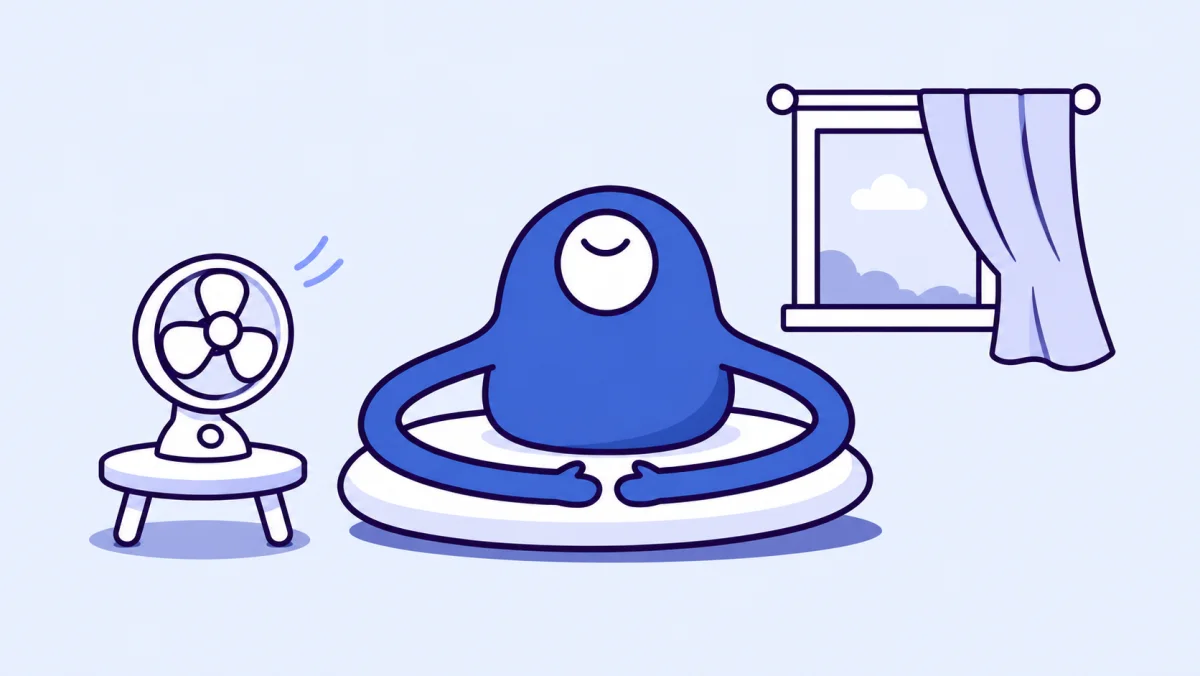
Change one thing you can change
Turn off an unwatched television, move a little farther from the door, or ask for a minute without conversation. Make one convenient adjustment. You do not need to turn the whole home into a dedicated meditation space.
If you are expecting an important call or need to respond to someone nearby, leave room for that. Respond to an alarm, a call for help or another sound that needs attention. A practice does not require ignoring your responsibilities.
Choose a point of contact instead of tracking every sound
Try the feeling of your palms against your thighs, or the chair supporting your body. Choose one at the start. After hearing a sound, feel that contact again. The sound may still be there; you do not need to check when it disappears.
If listening to the fan feels easy, sound can be your focus instead. If listening is irritating, use contact. You do not have to learn to enjoy every noise.
Try about one minute
Read the sequence first, then give it roughly a minute. Four parts of about fifteen seconds are simply a convenient starting arrangement. You do not need to watch the clock.
Find the contact
Sit somewhere comfortable, with your eyes open if you prefer. Rest your hands on your thighs and notice their weight and where they touch.
Allow a little room for sound
When you hear an everyday sound, briefly recognize that you heard it. You do not need to identify each source or label the sound good or bad.
Return once
If you start guessing who is walking past or thinking that the sound should stop, notice that and feel your palms again. Let breathing keep its own pace.
Decide what fits now
Look at an object in the room and move your fingers. Choose to sit a little longer, move somewhere else or finish here.
An interruption can be a reason to pause
If the doorbell rings, pause and answer it. Afterwards, you can return to a point of contact or finish without starting the minute over. A real interruption and a wandering thought are different situations; one response need not cover both.
If ongoing building work or conversation makes sitting difficult, change rooms, choose another time or shorten the attempt. Adjusting the setting is an available choice, too.
Ask something more specific than “Is it too noisy?”
The washing machine hums steadily and you can still feel your hands: you might continue. A family member comes over to discuss dinner: talk first, then decide whether to return. Try asking, “Do I want to sit a little longer? Does anything need my response first?”
The NHS beginner guide includes noticing distraction and returning as part of practice, along with awareness of present sensory experiences. This one-minute sequence is an original suggestion. It does not mean tolerating noise in every setting or expecting a particular feeling afterwards.
Try a separate sound sample if you want one
Oat offers voice-guided meditation and natural sounds. The website has a one-minute rain sample you can start yourself as a separate short listening attempt. It does not guide the contact practice above or make household sounds disappear.
There is no need to turn playback up to cover the room. If the two layers of sound feel more distracting, stop the sample and return to contact or finish. Choose a place and time that suit the home you have today.
Source and practice notes
The NHS source supports sensory awareness and returning after distraction. The washing-machine, doorbell and family-conversation examples, environmental adjustments and one-minute sequence are practical suggestions written for this article, rather than research findings about noise or treatment effects.